Highest
Home energy in Alaska: prices, net metering and what is open
Alaska has some of the highest electricity prices in the country, rates are set by your utility, net metering has a 25 kW limit, and most home energy rebates have not launched.
By VoltHearth Editorial Team Updated 6 min read
- Electricity price
- 26.11¢ per kWh
- Natural gas price
- $12.96 per Mcf
- Pick your supplier
- No, utility-set rates
- Net metering
- Yes, up to 25 kW
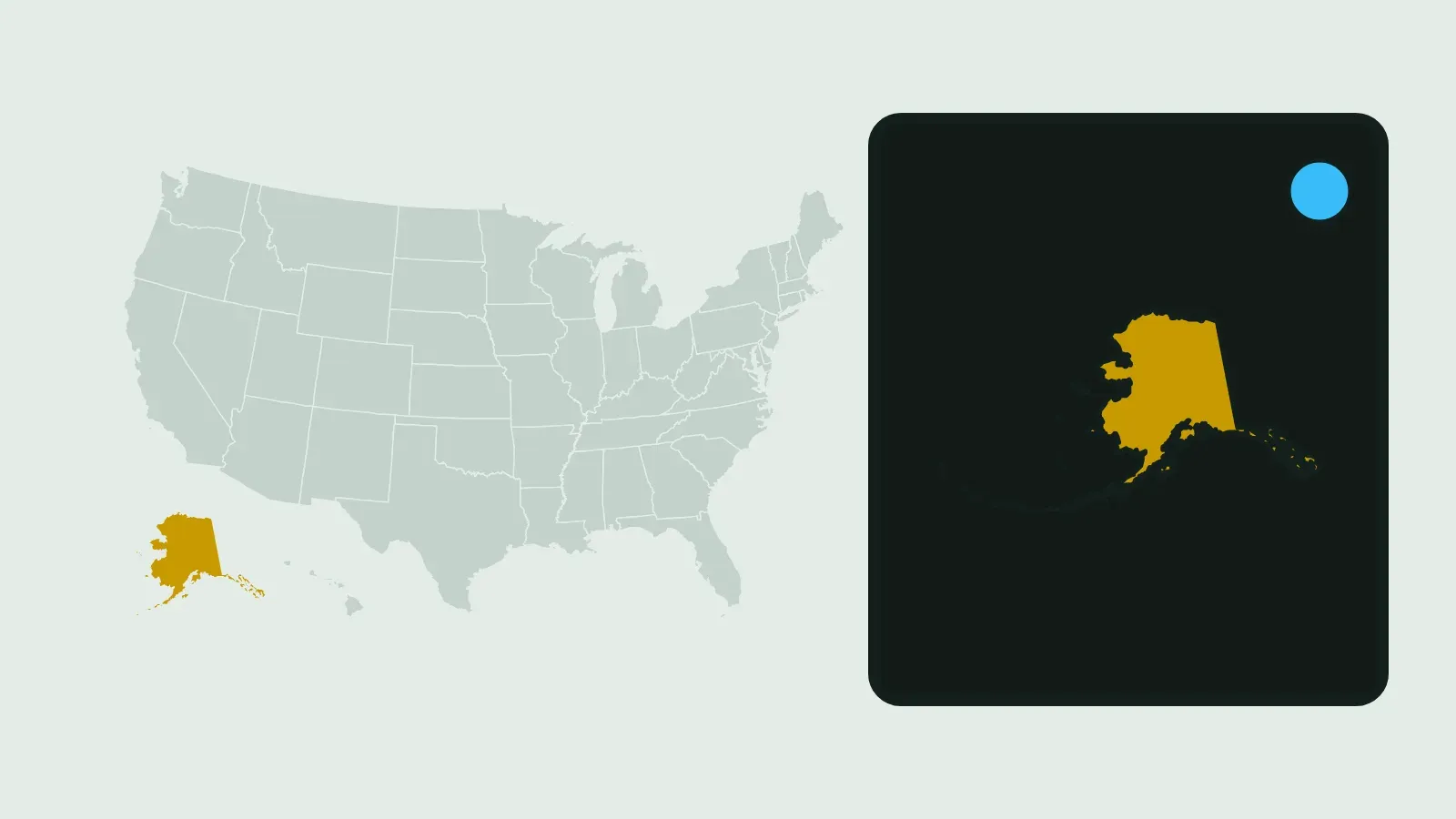
At a glance
Alaska households paid an average of 26.11¢ per kWh for electricity in 2025, about 52% above the national average, and $12.96 per thousand cubic feet for natural gas, below it. EIA data show no energy-only electricity suppliers selling in Alaska in 2024, so your rate comes from the utility that serves you. State rules require regulated utilities to offer net metering for systems up to 25 kW, and the state's HOMES and HEAR rebates had not launched on the state housing agency's page.
Alaska at a glance
What Alaskans pay for electricity and gas
The U.S. Energy Information Administration (EIA) reports statewide averages: total residential revenue divided by kilowatt-hours sold, so delivery charges and fees are inside the figure. Your own rate depends on your utility, rate plan and season, so treat these as a yardstick, not a quote.
| Energy and year | Alaska | U.S. |
|---|---|---|
| Electricity 2025 (¢ per kWh) | 26.11 | 17.23 |
| Electricity 2024 (¢ per kWh) | 24.82 | 16.48 |
| Natural gas 2025 (dollars per Mcf) | 12.96 | 15.34 |
| Natural gas 2024 (dollars per Mcf) | 11.73 | 14.50 |
At 26.11¢, a month with 1,000 kWh of use comes to about $261. Alaska electricity rose about 5% between 2024 and 2025 (24.82¢ to 26.11¢). Gas is the reverse of electricity: Alaska's average of $12.96 per Mcf was about 16% below the U.S. figure, though it rose about 10% in a year. One Mcf holds roughly 10.37 therms, so $12.96 per Mcf is about $1.25 per therm; the kWh, therm and ccf guide explains the units on your bill.
Who sells you electricity
Alaska households do not shop for an electricity supplier. EIA's 2024 Alaska profile lists energy-only provider sales of zero: every kilowatt-hour was sold by a full-service utility that also delivers it. Which utility that is depends on where you live, and your bill names it.
The Regulatory Commission of Alaska (RCA) regulates electric utilities under Alaska Statutes Chapter 42.05, with separate rules for electric cooperatives. Some very small systems fall outside parts of the commission's rules; the net metering regulations, for example, exempt certain independent systems that sell under 5,000,000 kWh a year. Ask your utility which rules apply to it.
Solar panels and what the grid pays you
Alaska is one of the states with a net metering rule. The RCA's regulations (3 AAC 50.900 and following) require economically regulated utilities to offer it, with limits worth knowing before you size a system.
- System size: no more than 25 kilowatts of nameplate capacity per consumer premises.
- Utility cap: total participating capacity is limited to 1.5% of the utility's average retail demand, which is annual retail kWh divided by 8,760 hours. A utility that sells 876,000,000 kWh a year has an average demand of 100,000 kW, so the cap would be 1,500 kW. Utilities may ask to go higher.
- Surplus power: if you send more energy to the grid than you take in a billing month, the commission's rule credits the surplus at the non-firm power rate in the utility's tariff, which is not the retail rate.
- Credits carry over: the rule says credit dollars reduce later bills and do not expire or revert to the utility.
Home energy rebates
The Alaska Housing Finance Corporation (AHFC) and the Alaska Energy Authority were allocated $74.6 million in July 2023 for two federally funded programs: HOMES, rebates for whole-home efficiency work, and the High-Efficiency Electric Home Rebate (HEEHR, called HEAR by the Department of Energy), rebates for electric appliances and equipment.
AHFC's page says the program has not launched, no launch date is estimated, and no rebates are available now with one exception: New Home Construction rebates, which AHFC launched in January 2025. It says there will be no retroactive rebates and warns that unsolicited offers about the program are likely scams. The page shows no update date and no per-household amounts. Federal rules allow up to $8,000 for HOMES and up to $14,000 per household for HEAR; a state sets its own limits. The HOMES and HEAR guide explains the programs.
Shipping and travel costs in a remote state
Distance adds cost to any home project in Alaska. The Department of Energy's Program Notice 26-1, effective May 29, 2026, says HOMES rebates can cover shipping and contractor travel for the territories, Alaska and Hawaii. Alaska had not published its HOMES rules on the AHFC page, so ask AHFC whether and how it will use that flexibility before you budget for it.
Who to call
- Electricity and natural gas: the Regulatory Commission of Alaska regulates electric and natural gas utilities, as well as water, telephone and pipeline carriers.
- Rebates: the Alaska Housing Finance Corporation, with the Alaska Energy Authority.
Quick answers
Can I choose my electricity provider in Alaska?
No. EIA's 2024 profile shows no energy-only supplier sales in Alaska, so your utility both sells and delivers your power. Your bill names the utility that serves you.
Does Alaska have net metering?
Yes, for customers of economically regulated utilities. The RCA's rule allows systems up to 25 kW per premises and credits surplus at the utility's non-firm power rate. Some small independent systems are exempt, so confirm with your utility.
Are Alaska home energy rebates available now?
Mostly no. AHFC's page says the HOMES and HEEHR program has not launched and no launch date is estimated, apart from New Home Construction rebates that AHFC launched in January 2025. Check AHFC before you start work you hope a rebate will cover.
Why is Alaska's electricity price so high?
EIA's 2025 average for Alaska households was 26.11¢ per kWh against 17.23¢ nationally. EIA's figures do not explain why. Your own rate depends on the utility serving you, so read its tariff and your bill.
Sources
- EIA — Electric Power Annual, Table 2.10, average price by state
- EIA — Average residential natural gas price by state
- EIA — Alaska electricity profile 2024
- Regulatory Commission of Alaska — Net metering standards, 3 AAC 50
- Regulatory Commission of Alaska — Statutes and regulations
- Alaska Housing Finance Corporation — Alaska residential energy rebates
- U.S. Department of Energy — Home Energy Rebates Program Notice 26-1
Prices are EIA statewide averages. Facts on this page were checked against these sources on November 19, 2026. The net metering rule text is the commission's published regulation, and the AHFC page shows no update date. Rules and rebate programs change; confirm with your utility and AHFC before you act.
Read next
-
Bill guide
Net metering
How exported solar power is credited on a bill, how net billing differs, and where to find your rule.
-
Credits and rebates
HOMES and HEAR rebates
State-run DOE rebates and the May 2026 rule changes. Status differs by state.
-
State reading
Hawaii
40.40¢ per kWh; island grids on petroleum; net metering closed to new applicants; rebates not open.