Moderate
Home energy in Colorado: prices, solar credits and rebates
Colorado households pay below-average gas prices, buy power from the utility that serves them, and can apply for state-run electrification rebates through registered contractors.
By VoltHearth Editorial Team Updated 6 min read
- Electricity price
- 15.69¢ per kWh
- Natural gas price
- $11.17 per Mcf
- Pick your supplier
- No, utility-set rates
- Net metering
- Credits carry forward
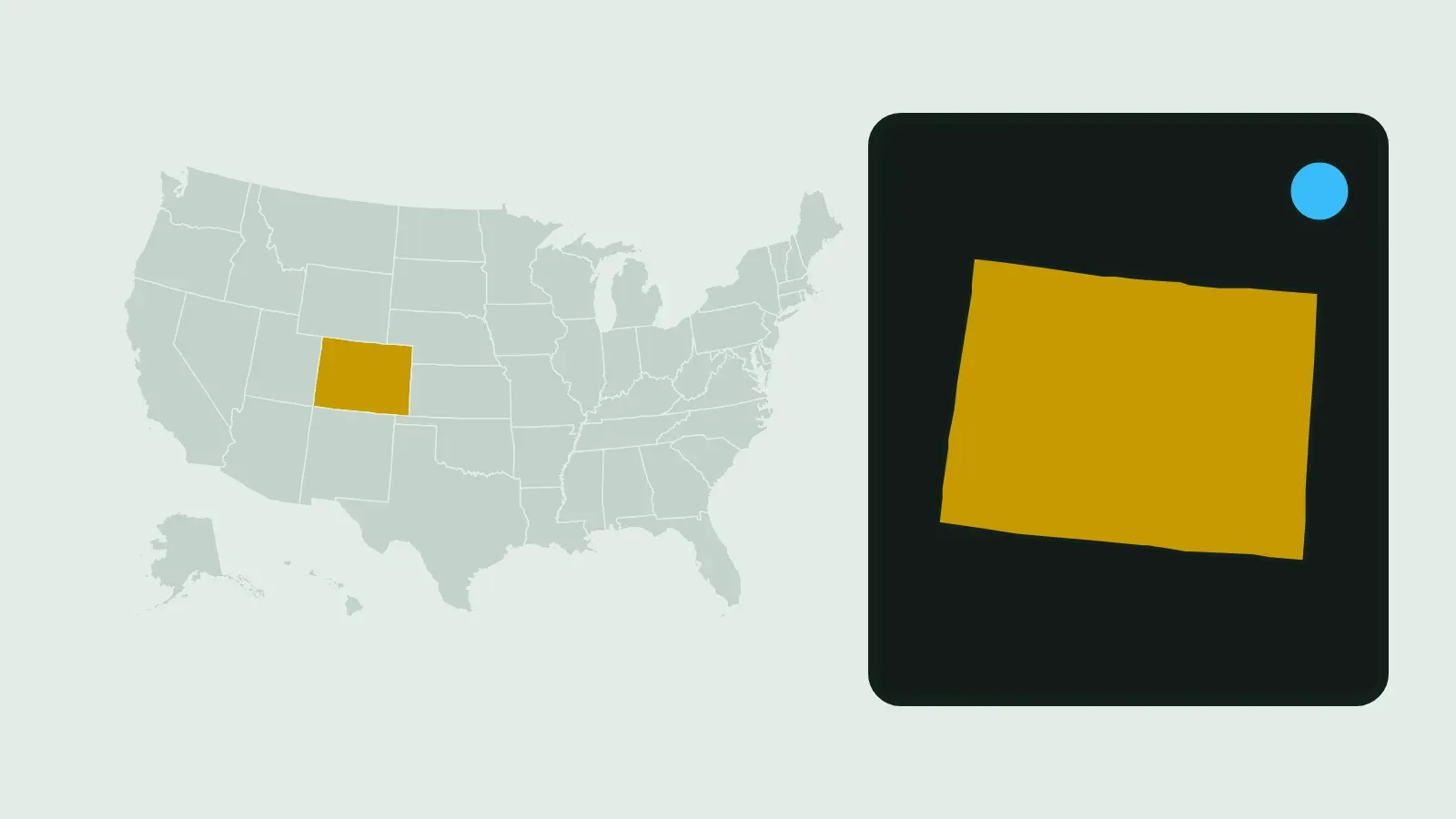
At a glance
Colorado households paid an average of 15.69¢ per kWh for electricity in 2025, below the national average, and $11.17 per thousand cubic feet for natural gas, about 27% below it. EIA data show no energy-only electricity suppliers selling in Colorado in 2024, so your rate comes from your utility. A 2021 state law lets customers with on-site solar carry monthly bill credits forward indefinitely. The Colorado Energy Office's rebate page says HEAR rebates are open to single-family households through registered contractors; the page shows no update date.
Colorado at a glance
What Coloradans pay for electricity and gas
The U.S. Energy Information Administration (EIA) reports statewide averages: total residential revenue divided by kilowatt-hours sold, so delivery charges and fees are inside the figure. Your own rate depends on your utility, rate plan and season, so treat these as a yardstick, not a quote.
| Energy and year | Colorado | U.S. |
|---|---|---|
| Electricity 2025 (¢ per kWh) | 15.69 | 17.23 |
| Electricity 2024 (¢ per kWh) | 14.92 | 16.48 |
| Natural gas 2025 (dollars per Mcf) | 11.17 | 15.34 |
| Natural gas 2024 (dollars per Mcf) | 10.58 | 14.50 |
At 15.69¢, a month with 1,000 kWh of use comes to about $157. Colorado electricity rose about 5% between 2024 and 2025 (14.92¢ to 15.69¢) and stayed about 9% below the U.S. average. Gas rose about 6% in a year and sat about 27% below the U.S. figure. One Mcf holds roughly 10.37 therms, so $11.17 per Mcf is about $1.08 per therm; the kWh, therm and ccf guide explains the units on your bill.
Who sells you electricity
Colorado households do not shop for an electricity supplier. EIA's 2024 Colorado profile lists energy-only provider sales of zero: every kilowatt-hour was sold by a full-service utility that also delivers it. Your bill names that utility. The Colorado Public Utilities Commission (PUC) regulates the state's utilities and, in its words, sets gas rates for its regulated utilities.
Co-ops and city-owned utilities may follow different rules, and the PUC page does not say how far its authority over them goes. Ask your utility whether the PUC regulates its rates. The electric bill guide shows which lines to check first.
Solar panels and what the utility credits you
Senate Bill 21-261, signed June 21, 2021, changed how Colorado customers with on-site generation are credited. The legislature's summary says customers can carry monthly credits forward indefinitely, at any service address in the utility's territory, or choose annual reimbursement, or donate the excess to a low-income energy assistance program.
- Size limits: the summary says the bill removes most of the older limit that a system cannot exceed 120% of a customer's historical annual use, and doubles the on-site limit for eligible installations from 500 kilowatts to 1 megawatt.
- Storage and adapters: energy storage becomes an eligible resource, and qualifying utilities must allow customer-owned meter collar adapters for residential installations under standards the PUC approves.
- Rules still sit with the PUC: the bill directs the PUC to write rules for interconnection, sharing between landlords and tenants, and allocating credits among rate schedules.
Home energy rebates
The Colorado Energy Office (CEO) runs two federally funded programs under its Home Energy Rebate Program: HEAR, rebates for electric appliances and equipment, and HER, whole-home efficiency rebates called HOMES elsewhere. The CEO page says HEAR rebates are now available to single-family households through registered contractors, and that rebates for small multifamily buildings, manufactured and mobile homes and large multifamily buildings were set to follow in early 2026. An earlier CEO page says the first phase launched through the Colorado Weatherization Assistance Program on October 30, 2024.
Neither CEO page shows an update date, an end date or a funds-remaining notice. Rebate money can be committed before a program's planned end, so confirm availability with the CEO before you sign a contract. The HOMES and HEAR guide explains how the programs work.
How the Colorado HEAR rebate is calculated
- Income tiers: households below 80% of area median income (AMI) get 100% of the qualified project cost, up to the limits; households at 80% to 150% AMI get 50%. Direct-to-consumer HEAR rebates are limited to households below 150% AMI.
- Limits: the total maximum is $14,000 per household. Per-upgrade caps range from $840 for an electric stove, cooktop, range or oven to $8,000 for a cold climate heat pump.
- Who qualifies: an existing Colorado home lived in at least half the year. New construction is not eligible, and renters need landlord permission.
- Paperwork: a photo ID, proof of ownership or renter status, and proof of income. The CEO says incomplete income-qualification applications, such as those without an upgrade plan, expire after 90 days.
Who to call
- Electricity and natural gas: the Colorado Public Utilities Commission, for the utilities it regulates.
- Rebates: the Colorado Energy Office.
Quick answers
Can I choose my electricity provider in Colorado?
No. EIA's 2024 profile shows no energy-only supplier sales in Colorado, so your utility both sells and delivers your power. Your bill names the utility that serves your address.
Does Colorado have net metering?
State law gives customers with on-site solar bill credits for exported power, and SB21-261 lets monthly credits carry forward indefinitely. The credit rate and the rules for your system size are in your utility's tariff and the PUC's rules.
Are Colorado home energy rebates available now?
The Colorado Energy Office page says HEAR rebates are available to single-family households through registered contractors. The page shows no update date or end date, so confirm with the CEO before you start work you hope a rebate will cover.
How much can a Colorado HEAR rebate pay?
Up to $14,000 per household in total, covering up to 100% of qualified costs below 80% of area median income and 50% at 80% to 150%. Each upgrade has its own cap, from $840 to $8,000.
Sources
- EIA — Electric Power Annual, Table 2.10, average price by state
- EIA — Average residential natural gas price by state
- EIA — Colorado electricity profile 2024
- Colorado General Assembly — SB21-261 summary
- Colorado Public Utilities Commission
- Colorado Energy Office — Home energy rebates
- Colorado Energy Office — Home energy rebate FAQ
Prices are EIA statewide averages. Facts on this page were checked against these sources on November 19, 2026. The CEO rebate pages show no update date. Rebate programs and utility tariffs change; confirm with your utility and the Colorado Energy Office before you act.
Read next
-
Bill guide
Net metering
How exported solar power is credited on a bill, how net billing differs, and where to find your rule.
-
Credits and rebates
HOMES and HEAR rebates
State-run DOE rebates and the May 2026 rule changes. Status differs by state.
-
State reading
Utah
13.02¢ per kWh; utility supplies power; net billing export credit; home rebates on hold.