Highest
Home energy in Connecticut: prices, supplier choice and rebates
Connecticut has some of the highest electricity prices in the country, you can pick a licensed electric supplier, and rooftop solar is paid through tariffs that replaced net metering.
By VoltHearth Editorial Team Updated 6 min read
- Electricity price
- 29.31¢ per kWh
- Natural gas price
- Not reported for 2025
- Pick your supplier
- Yes, licensed suppliers
- Net metering
- Replaced by RRES tariffs
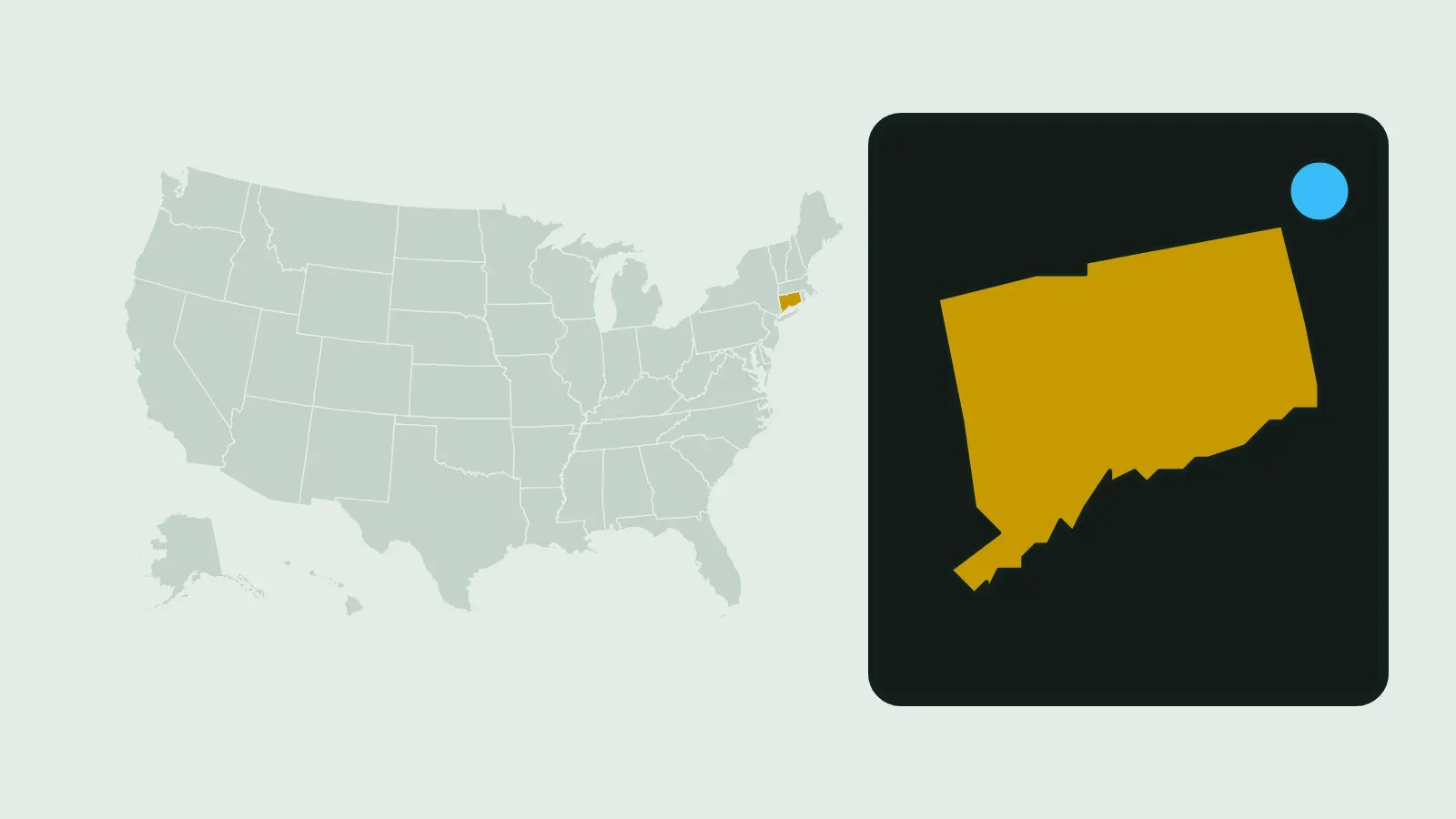
At a glance
Connecticut households paid an average of 29.31¢ per kWh for electricity in 2025, about 70% above the national average. EIA did not report a 2025 residential gas price for the state; the 2024 figure was $16.83 per thousand cubic feet. You can compare licensed electric suppliers against your utility's standard service offer, and in EIA's 2024 data energy-only suppliers sold about 49% of the state's retail electricity. The Residential Renewable Energy Solutions (RRES) program replaced net metering for rooftop solar, and the state's HOMES and HEAR rebates had not launched at the state's last published update, in July 2025.
Connecticut at a glance
What Connecticut households pay for electricity and gas
The U.S. Energy Information Administration (EIA) reports statewide averages: total residential revenue divided by kilowatt-hours sold, so delivery charges and fees are inside the figure. Your own rate depends on your utility, supplier, plan and season, so treat these as a yardstick, not a quote.
| Energy and year | Connecticut | U.S. |
|---|---|---|
| Electricity 2025 (¢ per kWh) | 29.31 | 17.23 |
| Electricity 2024 (¢ per kWh) | 28.75 | 16.48 |
| Natural gas 2025 (dollars per Mcf) | Not reported | 15.34 |
| Natural gas 2024 (dollars per Mcf) | 16.83 | 14.50 |
At 29.31¢, a month with 1,000 kWh of use comes to about $293. Connecticut electricity rose about 2% between 2024 and 2025 (28.75¢ to 29.31¢). For gas, the 2024 average of $16.83 per Mcf ran about 16% above the 2024 U.S. figure of $14.50. One Mcf holds roughly 10.37 therms, so $16.83 per Mcf is about $1.62 per therm; the kWh, therm and ccf guide explains the units on your bill.
Who sells you electricity
Connecticut separates supply from delivery. Your local utility delivers power and reads the meter, and you can either take the utility's standard service offer or buy supply from a licensed electric supplier. The Public Utilities Regulatory Authority (PURA) lists rates for licensed electric suppliers next to the standard service offer, and points to the Energize CT comparison tool.
EIA's 2024 profile shows 27.4 million megawatt-hours of retail sales, of which 13.5 million, about 49%, came from energy-only providers. EIA ranks the state ninth in the country for energy-only sales. The other 13.9 million, about 51%, came from full-service providers. The retail choice guide shows how to compare plans on the total bill at your own usage, including the contract length and what happens when a fixed price ends.
Solar panels and what the grid pays you
PURA describes the Residential Renewable Energy Solutions (RRES) program as the successor to the legacy net metering program and to the residential solar incentive program. Under RRES, residential solar owners receive tariff-based payments for the electricity their systems produce and send to the local grid. The program launched in January 2022 as a six-year program and is administered by Eversource and The United Illuminating Company. The PURA page gives no exact end date, no capacity limit and no enrollment status.
Home energy rebates
The Department of Energy and Environmental Protection (DEEP) is preparing two federally funded programs: HER, the whole-home efficiency rebate that is called HOMES elsewhere, with $49,830,560, and HEAR, rebates for electric appliances and equipment, with $49,732,517. DEEP says it is contracting with Connecticut's regulated electric utilities to administer most of the money and holds 5% in reserve for areas that no regulated electric utility serves.
DEEP's page, last updated July 2025, says neither program had launched and that rebates will not be available until they do. It hoped to launch HEAR in mid-2025 and HER in early 2026, depending on federal approval. VoltHearth did not find a newer DEEP status, so check the page before you start work you hope a rebate will cover. Federal rules allow up to $8,000 for HOMES and up to $14,000 per household for HEAR; a state sets its own limits. The HOMES and HEAR guide explains the programs.
A separate state fund for weatherization barriers
In December 2025, Governor Lamont announced $18 million in state bond funding for a new Housing Environmental Improvement Revolving Loan and Grant Fund, run by DEEP and authorized by Public Act 25-125. The money is split into $12 million for loans to developers of existing multifamily affordable housing and $6 million to remove barriers such as asbestos, knob and tube wiring, mold and moisture that keep lower-income single-family homes out of weatherization programs. DEEP said it hoped to select implementing entities in early to mid-2026 and to launch the grants and loans by the end of 2026. This fund is separate from HOMES and HEAR, and the announcement does not say whether it has opened.
Who to call
- Electricity and natural gas: the Public Utilities Regulatory Authority (PURA) oversees electric, natural gas and water companies, including their rates and services.
- Supplier comparison: Energize CT, linked from PURA's website.
- Rebates: the Department of Energy and Environmental Protection (DEEP).
Quick answers
Can I choose my electricity provider in Connecticut?
Yes. PURA lists licensed electric suppliers alongside your utility's standard service offer, and EIA's 2024 data show energy-only suppliers sold about 49% of the state's retail electricity. Your utility keeps delivering the power whichever you choose.
Does Connecticut have net metering?
PURA says the RRES program replaces the legacy net metering program. Residential solar owners receive tariff-based payments for power their systems send to the grid. Ask Eversource or United Illuminating for the current tariff and whether enrollment is open.
Are Connecticut home energy rebates available now?
DEEP's page, last updated July 2025, said they had not launched. VoltHearth did not find a newer status, so check DEEP before you start work you hope a rebate will cover.
Why is there no 2025 Connecticut gas price here?
EIA did not report a 2025 residential gas price for Connecticut in the table VoltHearth uses. The 2024 average was $16.83 per Mcf, about $1.62 per therm. Your own rate depends on the gas utility serving you.
Sources
- EIA — Electric Power Annual, Table 2.10, average price by state
- EIA — Average residential natural gas price by state
- EIA — Connecticut electricity profile 2024
- PURA — Public Utilities Regulatory Authority
- PURA — Clean energy programs, Residential Renewable Energy Solutions
- DEEP — Inflation Reduction Act home energy rebate programs
- Governor Lamont — Funding for a new state energy efficiency program (December 2025)
Prices are EIA statewide averages. Facts on this page were checked against these sources on November 19, 2026. The DEEP rebate page was last updated in July 2025, so its status may have changed. Rebate programs and utility tariffs change; confirm with your utility and DEEP before you act.
Read next
-
Bill guide
Retail choice plans
What you can switch when you pick an electricity supplier, plan types, and how to compare offers.
-
Credits and rebates
HOMES and HEAR rebates
State-run DOE rebates and the May 2026 rule changes. Status differs by state.
-
State reading
Massachusetts
30.41¢ per kWh; supplier choice; net metering with caps; HER and HEAR not confirmed open.