Low
Home energy in Idaho: prices, who sells you power and what is open
Idaho electricity and gas both cost well below the U.S. average. Idaho Power pays solar exports a seasonal credit, the state offers an income tax deduction for some systems, and federal home rebates are not available.
By VoltHearth Editorial Team Updated 6 min read
- Electricity price
- 11.83¢ per kWh
- Natural gas price
- $7.69 per Mcf
- Pick your supplier
- Utility by address
- Net metering
- Utility export credits
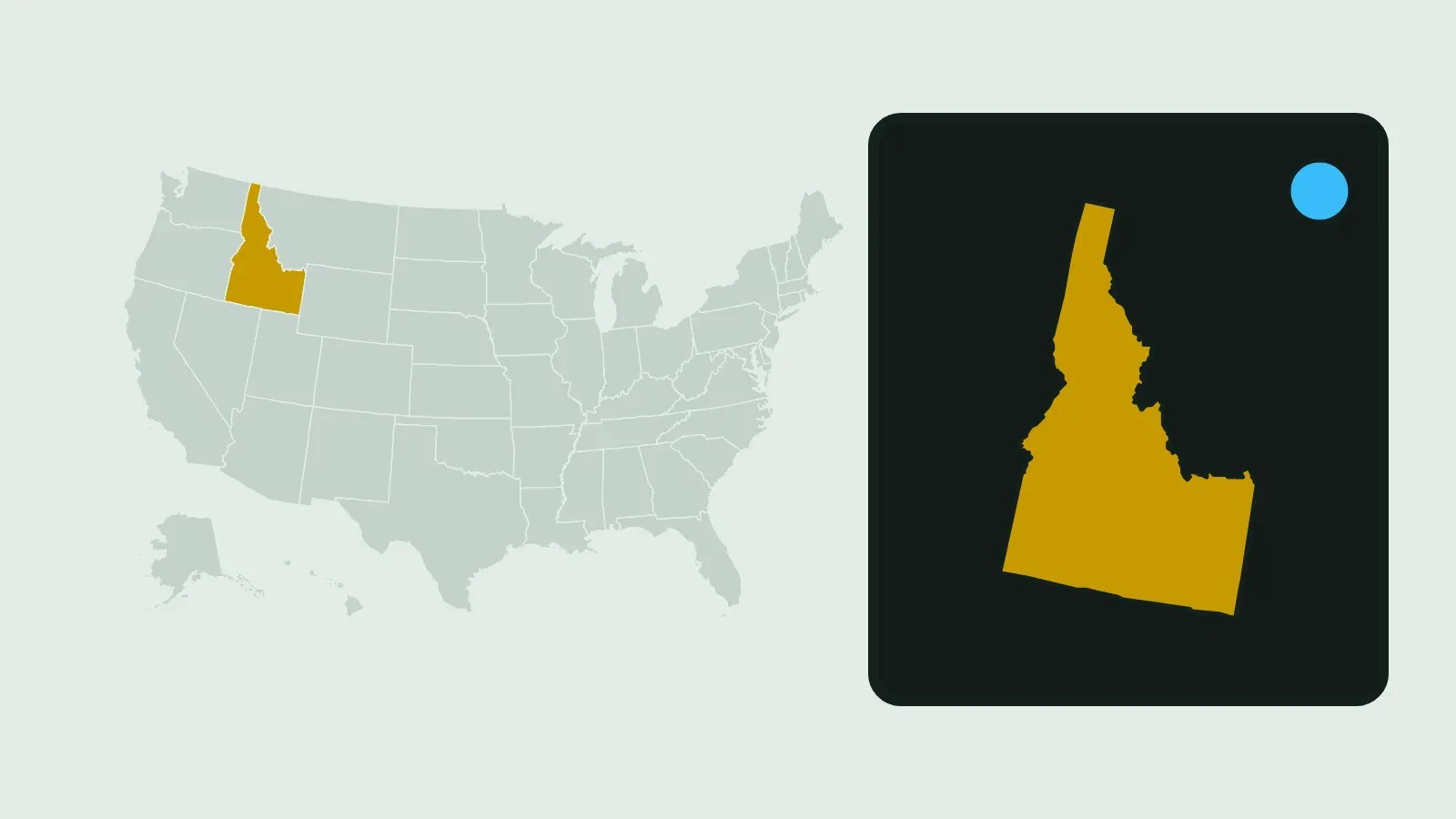
At a glance
Idaho households paid an average of 11.83¢ per kWh for electricity in 2025, about 31% below the national average, and $7.69 per thousand cubic feet for natural gas, about half the national average. Your address decides your utility. Idaho Power credits rooftop solar exports at a seasonal, time-variant rate rather than the retail rate, and the state energy office says federal home energy rebates are not currently available.
Idaho at a glance
What Idahoans pay for electricity and gas
The U.S. Energy Information Administration (EIA) reports statewide averages: total residential revenue divided by kilowatt-hours sold, so delivery charges and fees are inside the figure. Your own rate depends on your utility and rate plan, so treat these as a yardstick, not a quote.
| Energy | Idaho 2025 | Idaho 2024 | U.S. 2025 |
|---|---|---|---|
| Electricity (¢ per kWh) | 11.83 | 11.52 | 17.23 |
| Natural gas (dollars per Mcf) | 7.69 | 8.51 | 15.34 |
At 11.83¢, a month with 1,000 kWh of use comes to about $118. Idaho electricity rose about 3% between 2024 and 2025 (11.52¢ to 11.83¢) and sits about 31% below the U.S. average. Gas fell about 10% from 2024 and ran about half the U.S. average. One Mcf holds roughly 10.37 therms, so $7.69 per Mcf is about $0.74 per therm; the kWh, therm and ccf guide explains the units on your bill.
Who sells you electricity
The Idaho Public Utilities Commission (PUC) lists three electric companies on its electric page: Avista, Idaho Power and Rocky Mountain Power. Your address decides which one serves you, and the name is at the top of your bill. The PUC page does not describe supplier choice, cooperatives or city utilities, so ask your utility whether its rates and solar policy fall under the commission.
To read your bill line by line, use the electric bill guide and your utility's published rate schedule.
Solar panels and what the grid pays you
For Idaho Power customers, the PUC's Order No. 36785 of September 30, 2025 describes how exports are paid. Customers who are not on the older, grandfathered net metering terms receive an Export Credit Rate (ECR) that is seasonal and varies by time of day. Exports are credited at the ECR, not at the retail rate. The order says the purpose of on-site generation is to offset a customer's own use.
- Rate by hour and season: the ECR differs for summer on-peak hours, summer off-peak hours and non-summer hours, so what you earn for an exported kilowatt-hour depends on when you export it.
- Annual update paused: the Commission limited the fall in the avoided energy value to 40% and suspended the annual update requirement until 2028. The mitigated rate stays in effect until the utility's April 1, 2028 filing.
- Effective date: October 1, 2025.
- Older systems: the order refers to grandfathering approved in an earlier order and notes that tariffs are not contracts and their prices and terms are subject to change.
The federal tax credit for rooftop solar ended for expenditures made after December 31, 2025. What happened to 25C and 25D explains what is left.
Home energy rebates
Idaho's Office of Energy and Mineral Resources (OEMR) says on its incentives page that the federal home energy rebates are "not currently available." It advises against making purchasing decisions based on expected rebates and points readers to the Department of Energy's website for updates. The page gives no launch date. How the programs work in states where they have launched is in the HOMES and HEAR guide.
The same page lists other help: low-interest State Energy Loan Program loans for efficiency projects on single-family homes, which are credit-evaluated and secured with real estate, and the Weatherization Assistance Program for income-eligible homeowners and renters through the Idaho Department of Health and Welfare. See the weatherization guide.
Idaho's state income tax deduction
OEMR describes the Idaho Residential Alternative Energy Tax Deduction. It allows a deduction of 40% of the cost of qualifying solar, wind, geothermal and certain biomass systems used for heating or electricity. You can take it in the year of installation and then 20% per year for three more years. The page states that "the maximum deduction in any one year is $5,000," with a total maximum of $20,000.
This is a deduction from taxable income, not a credit, so its value depends on your tax situation. OEMR recommends consulting a licensed tax professional. The OEMR home page also carries a notice that, effective July 1, 2026, the office merged with the Office of Species Conservation as the Office of Species, Minerals and Energy Coordination, and it lists the same address and phone number.
Who to call
- Electricity and natural gas: the Idaho Public Utilities Commission, which lists both electric and natural gas companies.
- Rebates and incentives: OEMR, 304 N. 8th St, Suite 250, Boise, at (208) 332-1660.
- Your own rate: your utility's tariff, which names your plan and its charges.
Quick answers
Does Idaho have net metering?
Idaho Power's customers who are not on grandfathered net metering terms are paid an Export Credit Rate that varies by season and time of day, not the retail rate. The PUC order of September 30, 2025 took effect October 1, 2025. Other utilities have their own tariffs.
Are Idaho home energy rebates available now?
No. OEMR's incentives page says the federal home energy rebates are not currently available and advises against buying equipment on the expectation of one.
Why is Idaho electricity below the U.S. average?
EIA's 2025 average for Idaho households was 11.83¢ per kWh against 17.23¢ nationally. The figure blends every utility in the state, and your own bill depends on your utility's rate plan.
Is there an Idaho tax break for solar?
OEMR describes a state income tax deduction of 40% of qualifying system costs in the first year and 20% a year for three more, with a $5,000 limit in any one year. Ask a licensed tax professional how it applies to you.
Sources
- EIA — Electric Power Annual, Table 2.10, average price by state
- EIA — Average residential natural gas price by state
- Idaho Public Utilities Commission — electric companies
- Idaho PUC — Order No. 36785, Idaho Power export credit rate (Sept. 30, 2025)
- Idaho Office of Energy and Mineral Resources — home page
- Idaho Office of Energy and Mineral Resources — incentives for homeowners
Prices are EIA statewide averages. Facts on this page were checked against these sources on November 19, 2026. Rebate programs and utility policies change; confirm with your utility and OEMR before you act.
Read next
-

Bill guide
Net metering
How exported solar power is credited on a bill, how net billing differs, and where to find your rule.
-

Credits and rebates
HOMES and HEAR rebates
State-run DOE rebates and the May 2026 rule changes. Status differs by state.
-
State reading
Montana
12.99¢ per kWh; net metering law since 1999; home energy rebates not available yet.