Moderate
Home energy in Indiana: prices, who sells you power and what is open
Indiana electricity and gas both cost less than the U.S. average, but gas rose about 21% in a year. State law credits solar exports at a wholesale-based rate, and the Indiana Energy Saver rebates are listed as open.
By VoltHearth Editorial Team Updated 6 min read
- Electricity price
- 15.96¢ per kWh
- Natural gas price
- $11.49 per Mcf
- Pick your supplier
- Utility by address
- Net metering
- Export credit (EDG)
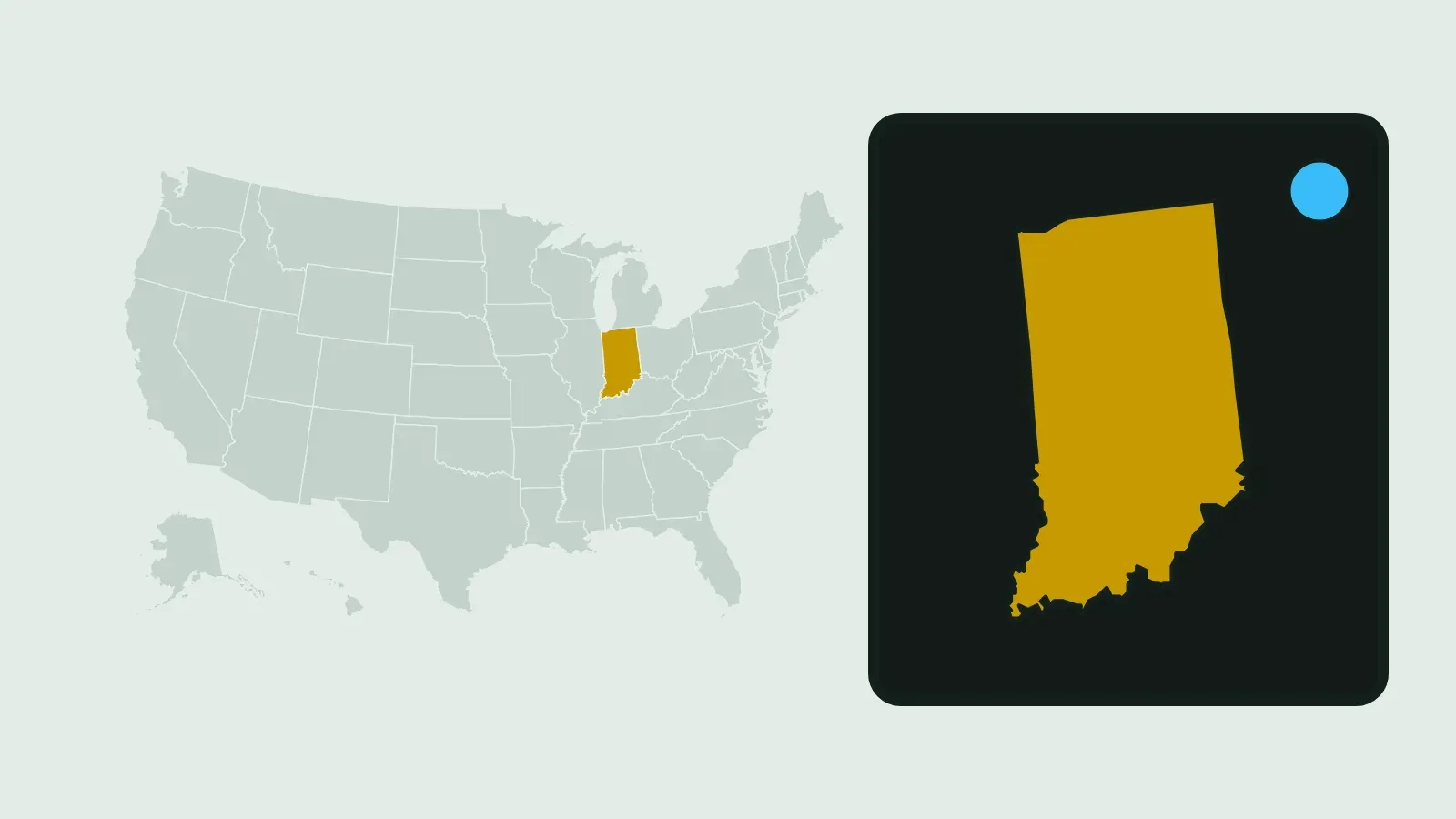
At a glance
Indiana households paid an average of 15.96¢ per kWh for electricity in 2025, about 7% below the national average, and $11.49 per thousand cubic feet for natural gas, about 25% below it, though up about 21% from 2024. Your address decides your utility. Under Indiana Code chapter 8-1-40, new solar customers are paid an excess distributed generation rate set at 125% of a wholesale average. The Office of Energy Development lists the Indiana Energy Saver Program, with roughly $182 million in federal funding, as open.
Indiana at a glance
What Hoosiers pay for electricity and gas
The U.S. Energy Information Administration (EIA) reports statewide averages: total residential revenue divided by kilowatt-hours sold, so delivery charges and fees are inside the figure. Your own rate depends on your utility and rate plan, so treat these as a yardstick, not a quote.
| Energy | Indiana 2025 | Indiana 2024 | U.S. 2025 |
|---|---|---|---|
| Electricity (¢ per kWh) | 15.96 | 14.77 | 17.23 |
| Natural gas (dollars per Mcf) | 11.49 | 9.50 | 15.34 |
At 15.96¢, a month with 1,000 kWh of use comes to about $160. Indiana electricity rose about 8% between 2024 and 2025 (14.77¢ to 15.96¢) and sits about 7% below the U.S. average. Gas rose faster: $9.50 to $11.49 per Mcf, about 21%, though it is still about 25% below the U.S. average. One Mcf holds roughly 10.37 therms, so $11.49 per Mcf is about $1.11 per therm; the kWh, therm and ccf guide explains the units on your bill.
Who sells you electricity
Your address decides which utility serves you, and the name is at the top of your bill. The Indiana Utility Regulatory Commission (IURC) says state statute requires it to decide in the public interest so that utilities provide safe and reliable service at just and reasonable rates. Its site has separate pages for the electricity and natural gas industries.
To check a charge, find your utility's tariff, which is the rate schedule the IURC reviews. The electric bill guide walks through the lines, and the rate structures guide explains how plans are built.
Solar panels and what the grid pays you
Indiana moved from net metering to excess distributed generation (EDG) under Indiana Code chapter 8-1-40. CenterPoint Energy's Indiana tariff page, which cites the statute, describes the credit: the EDG rate "is recalculated each year based on the average wholesale rate from the previous year multiplied by 125%," and the new rate takes effect each March 1. That is a wholesale-based rate, not the retail price you pay.
- Older systems: CenterPoint's page says systems installed by December 31, 2017 keep full retail credit for exports until July 1, 2047, and systems installed after January 1, 2018 but before the EDG rate began keep it until July 1, 2032.
- After that: those customers move to the EDG rate.
- Replacing a system: a net metering customer who replaces the facility after the transition date must apply as an EDG customer. Repairs and upgrades that do not raise the inverter's AC nameplate capacity do not count as replacement.
The federal tax credit for rooftop solar ended for expenditures made after December 31, 2025. What happened to 25C and 25D explains what is left.
Home energy rebates
The Indiana Office of Energy Development (OED) runs the Indiana Energy Saver Program, which combines HOMES and HEAR with roughly $182 million in federal funding. The OED page says the program was announced May 14, 2025, "was launched in the summer of 2025," and that applications are open, with no closing date listed.
- HOMES: whole-home retrofits for single-family and multifamily residents that achieve at least 20% predicted energy savings, such as insulation, air sealing and ENERGY STAR equipment including HVAC systems and water heaters.
- HEAR: households below 150% of area median income, for select first-time upgrades such as heat pump water heaters, heat pump HVAC systems and electrical upgrades.
- Amounts: the page gives no dollar amounts. Rebates are a discount on eligible products and installation by a qualified contractor.
Funds and rules can change after a program opens, so confirm on the OED page that applications are still being accepted before you start work. How the programs work is in the HOMES and HEAR guide.
Applying without getting scammed
The OED page says to apply only through IndianaEnergySaver.com and warns that contractors do not go door to door or solicit business for the program. If someone offers to sign you up at your door, use the program's help line at 855-446-7283 or the state's rebates contact at [email protected] to check before you share any information. The installer quotes guide lists what to ask any contractor.
Who to call
- Electricity and natural gas: the Indiana Utility Regulatory Commission, which lists electricity and natural gas industry divisions.
- Rebates: the Indiana Energy Saver Program at 855-446-7283 or [email protected], and OED at [email protected].
- Your own rate: your utility's tariff, which names your plan and its charges.
Quick answers
Can I choose my electricity supplier in Indiana?
Your address decides which utility serves you, and the name is at the top of your bill. To compare costs, read your utility's tariff and check each line of your bill.
Does Indiana have net metering?
Under Indiana Code chapter 8-1-40, new solar customers are paid an excess distributed generation rate, set each March 1 at 125% of the prior year's average wholesale rate, according to CenterPoint Energy's tariff page. Existing net metering customers keep full retail credit until dates the page gives as 2032 or 2047, depending on when the system was installed.
Are Indiana home energy rebates available now?
The Office of Energy Development's page says applications for the Indiana Energy Saver Program are open and lists no closing date. Apply only through IndianaEnergySaver.com, and check that page before you start work.
Why did Indiana gas prices rise in 2025?
EIA's averages show $9.50 per Mcf in 2024 and $11.49 in 2025, about 21% higher. The sources used here do not give a cause, and your own rate depends on the gas utility serving your address.
Sources
- EIA — Electric Power Annual, Table 2.10, average price by state
- EIA — Average residential natural gas price by state
- Indiana Utility Regulatory Commission — home page
- CenterPoint Energy Indiana — excess distributed generation (EDG) under Indiana Code 8-1-40
- Indiana Office of Energy Development — home page
- Indiana Office of Energy Development — homeowner incentives (Indiana Energy Saver Program)
Prices are EIA statewide averages. Facts on this page were checked against these sources on November 19, 2026. Rebate programs and utility policies change; confirm with your utility and the Indiana Energy Saver Program before you act.
Read next
-
Bill guide
Net metering
How exported solar power is credited on a bill, how net billing differs, and where to find your rule.
-
Credits and rebates
HOMES and HEAR rebates
State-run DOE rebates and the May 2026 rule changes. Status differs by state.
-
State reading
Illinois
17.67¢ per kWh; electric supplier choice; supply-only net metering since 2025; rebates not launched.