Highest
Home energy in New Jersey: prices, supplier choice and what is open
Every New Jersey customer can pick an electricity supplier, solar exports earn a retail-value credit over a 12-month cycle, and the state's federally funded home rebates are not open yet.
By VoltHearth Editorial Team Updated 5 min read
- Electricity price
- 22.48¢ per kWh
- Natural gas price
- $14.21 per Mcf
- Pick your supplier
- Yes, all customers
- Net metering
- Yes, annual retail credit
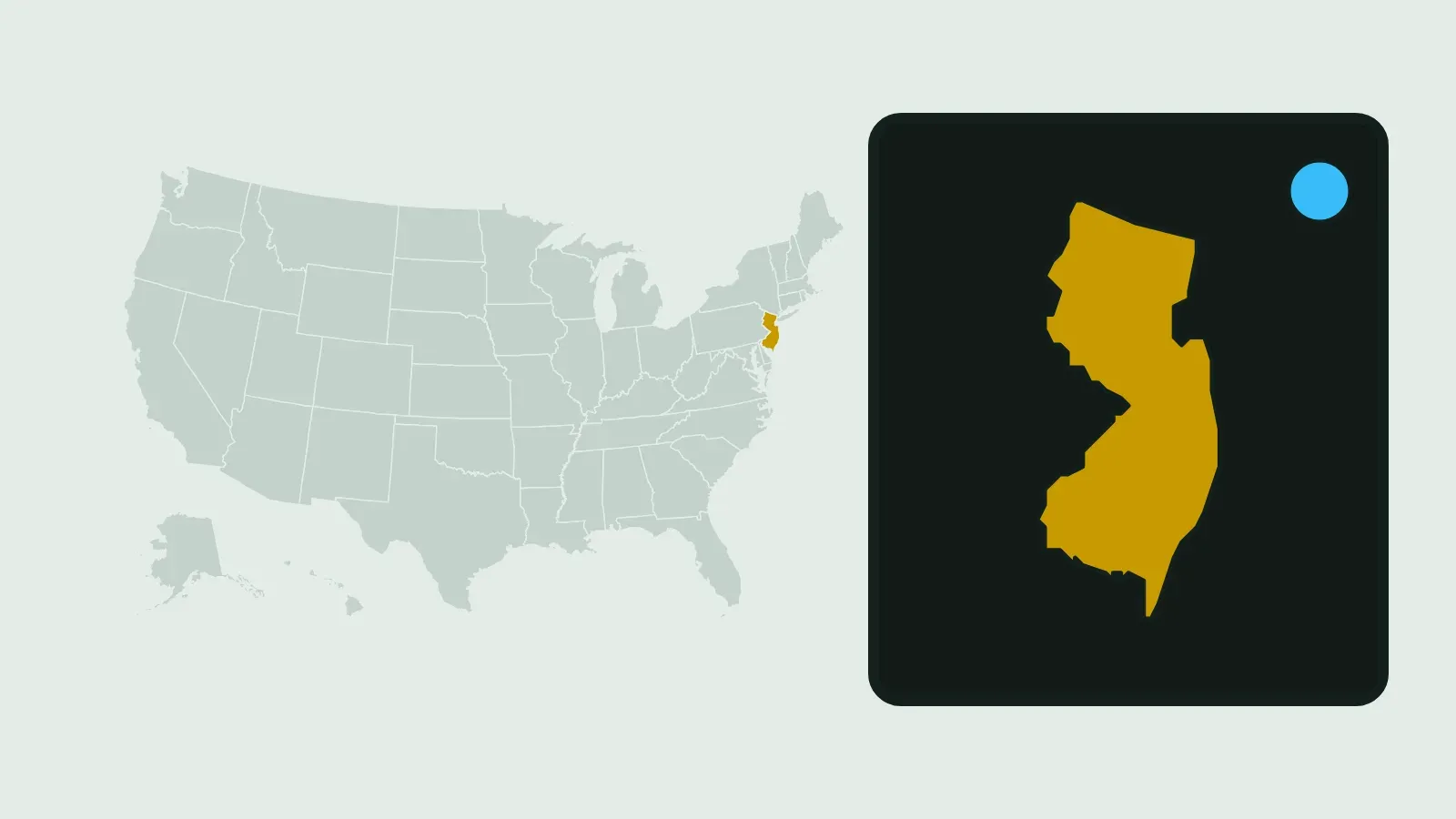
At a glance
New Jersey households paid an average of 22.48¢ per kWh for electricity in 2025, well above the national average, and $14.21 per thousand cubic feet for natural gas, a little below it. The state's Board of Public Utilities says all customers can buy electricity or gas from a third-party supplier. Net metering credits solar exports at retail value over a 12-month cycle. The state's HOMES and HEAR rebates were described as in development, not open for applications, on the state's program page.
New Jersey at a glance
What New Jersey households pay for electricity and gas
The U.S. Energy Information Administration (EIA) publishes a statewide average for each fuel: what utilities and suppliers billed households, divided by what they used. Delivery charges and fees are inside the number. Your own rate depends on your utility, your supplier and the season, so read these as a yardstick, not a quote.
| Average price | 2024 | 2025 |
|---|---|---|
| Electricity, New Jersey (¢ per kWh) | 19.34 | 22.48 |
| Electricity, U.S. (¢ per kWh) | 16.48 | 17.23 |
| Natural gas, New Jersey (dollars per Mcf) | 13.21 | 14.21 |
| Natural gas, U.S. (dollars per Mcf) | 14.50 | 15.34 |
At 22.48¢, a month with 1,000 kWh of use comes to about $224.80. The New Jersey average rose about 16% between 2024 and 2025 and sat about 30% above the U.S. average. Gas runs the other way: $14.21 per Mcf is about 7% below the U.S. figure. One Mcf holds roughly 10.37 therms, so $14.21 is about $1.37 per therm. The kWh, therm and ccf guide explains the units on your bill.
Who sells you electricity
New Jersey opened its electric and gas markets to competition under a state law known as EDECA. The Board of Public Utilities (BPU) says all customers in the state can buy their natural gas, their electricity or both from a third-party supplier instead of their local utility. Your utility still delivers the power and the gas, so a supplier switch changes the price per unit, not who restores service after a storm.
- Who can choose: every residential customer, according to the BPU.
- What you compare: the supply price, contract length, fees and whether the rate is fixed or variable. The retail choice guide shows how to compare plans on your total bill.
- If you have solar: switching suppliers, or changing your anniversary date, closes out your annual solar balance. Leftover exported kWh are credited at the wholesale price, not the retail price, and a new 12-month cycle begins.
Solar panels and net metering
New Jersey net metering gives you a retail-value credit on your utility bill for each kilowatt-hour your system sends to the grid, up to what you use. Credits are netted once a year, on a 12-month cycle that starts on your anniversary date. If you still have exported kWh left at the end of the cycle, they are credited at the wholesale value of electricity. To be eligible, your system's capacity cannot exceed your annual electric needs.
The federal tax credit for rooftop solar ended for systems finished after December 31, 2025, so bill credits now carry more of the payback. What happened to 25C and 25D explains what is left.
Home energy rebates
The federally funded HOMES and HEAR programs are meant to pay for whole-home efficiency work and for electric appliances. New Jersey's program page calls them Home Efficiency Rebates and Home Electrification and Appliance Rebates, and says both are "currently in development and are not yet open for applications." It says the state is finalizing materials with the U.S. Department of Energy. The page shows no launch date and no rebate amounts, and it carries no update date.
The state describes two paths: a Multifamily Retrofit Initiative for Sustainability and Equity, and CP-HEAR, an electrification add-on to the existing Comfort Partners program for low-income households. Federal rules allow HEAR rebates of up to $14,000 per household and HOMES rebates of up to $8,000, but a state sets its own limits.
In May 2026 the Department of Energy issued new guidance for these programs. It renamed HOMES "Home Owner Managing Energy Savings" and told states that had not launched to meet the new requirements first. See the HOMES and HEAR guide for how the programs work where they are open.
Where New Jersey's power comes from
EIA reports that in 2023 natural gas supplied 49% of New Jersey's in-state generation and nuclear 42%. Renewables supplied 8%, about 87% of that from solar. The state imported nearly one-fifth of its electricity from other states over the regional grid. The state's last two coal plants closed in 2022.
On July 15, 2026, the BPU approved a one-year transition plan for utility-run efficiency programs, covering July 1, 2027 through June 30, 2028. The BPU says it shifts the focus to smart, connected home technologies and prepares for a virtual power plant program in 2027, with utility rebates for customers who have grid-connected devices such as smart thermostats and heat pumps.
Who to call
- Electricity and gas: the New Jersey Board of Public Utilities, which authorizes supplier competition and publishes the rules your utility follows.
- Rebates and efficiency programs: the NJ Clean Energy Program, listed on the state's program page.
- Interconnection and billing questions: your utility, which applies the net metering rule to your account.
Quick answers
Can I choose my electricity supplier in New Jersey?
Yes. The Board of Public Utilities says all customers can buy their electricity or gas from a third-party supplier. Your utility keeps delivering it. Compare the total bill at your own usage, not just the headline price.
How does net metering work in New Jersey?
You get a retail-value credit for each kWh you export, netted over 12 months from your anniversary date. Exported kWh left at the end of the cycle are credited at the wholesale value of electricity.
Are New Jersey home energy rebates available now?
Not according to the state's program page, which says HOMES and HEAR are in development and not yet open for applications. The page is undated, so check the NJ Clean Energy Program before you start work you hope a rebate will cover.
Why are New Jersey electricity prices above the U.S. average?
EIA's 2025 average for New Jersey households was 22.48¢ per kWh against 17.23¢ nationally. The figure includes delivery charges and fees. Your utility's tariff and your bill show how your own rate is built; the electric bill guide walks through the lines.
Sources
- EIA — Electric Power Annual, Table 2.10, average price by state
- EIA — Average residential natural gas price by state
- EIA — New Jersey state profile
- NJ Board of Public Utilities — Switching suppliers
- NJ Clean Energy Program — Net metering and interconnection
- NJ Clean Energy Program — Inflation Reduction Act home energy rebates in New Jersey
- NJ Board of Public Utilities — Efficiency transition plan, July 15, 2026
- U.S. Department of Energy — Program Notice 26-1 (HOMES)
Prices are EIA statewide averages. Facts on this page were checked against these sources on November 19, 2026. Net metering rules and rebate programs change; confirm with your utility and the NJ Clean Energy Program before you act.
Read next
-
Bill guide
Net metering
How exported solar power is credited on a bill, how net billing differs, and where to find your rule.
-
Credits and rebates
HOMES and HEAR rebates
State-run DOE rebates and the May 2026 rule changes. Status differs by state.
-
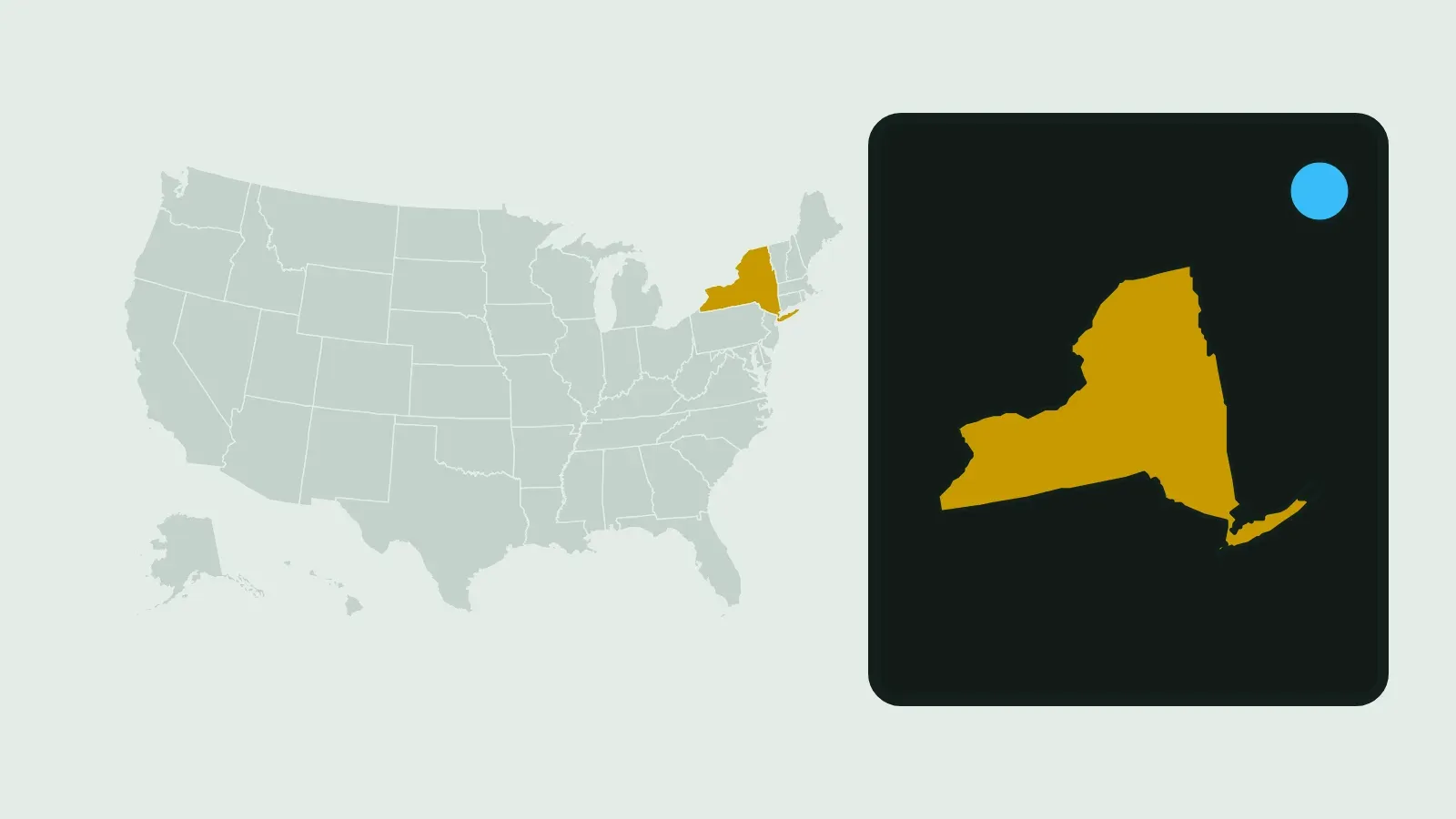
State reading
New York
26.39¢ per kWh; supplier choice is optional; net metering by default; EmPower+ rebates, dates unconfirmed.