Moderate
Home energy in North Carolina: prices, service areas and what is open
North Carolina assigns electric service areas instead of letting you shop for a supplier, Duke Energy's solar credits changed in 2023, and the state's home rebates are opening county by county.
By VoltHearth Editorial Team Updated 6 min read
- Electricity price
- 14.00¢ per kWh
- Natural gas price
- $16.42 per Mcf (2024)
- Pick your supplier
- No; assigned areas
- Net metering
- Duke riders; co-ops vary
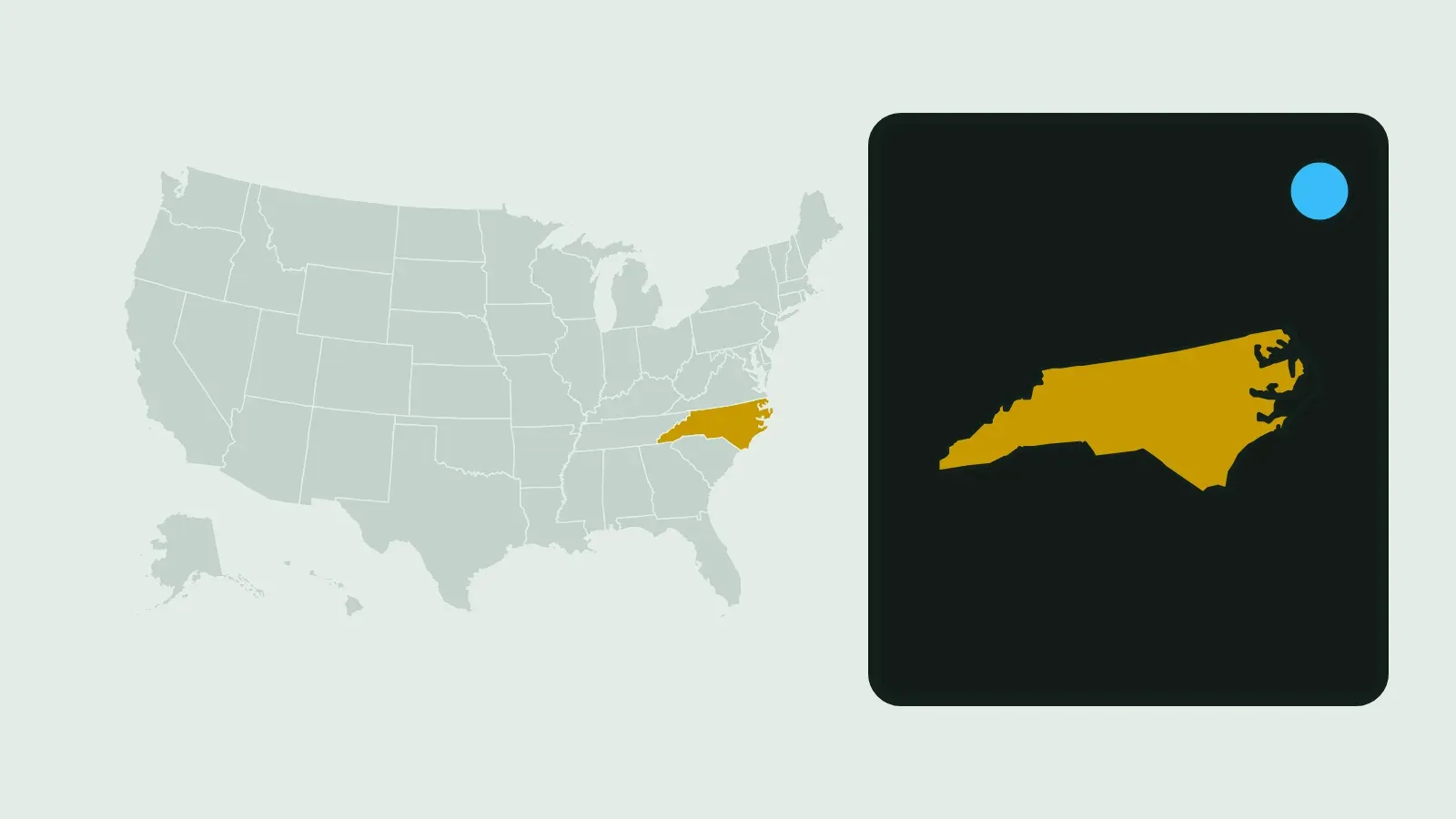
At a glance
North Carolina households paid an average of 14.00¢ per kWh for electricity in 2025, about 19% below the national average. EIA did not report a 2025 gas average for the state; the 2024 figure was $16.42 per thousand cubic feet. Electric service areas are assigned by the Utilities Commission, so you buy from the utility that serves your address. Duke Energy's residential solar tariffs changed in 2023, and the state's home energy rebates launched January 16, 2025 and are rolling out by county.
North Carolina at a glance
What North Carolina households pay for electricity and gas
The U.S. Energy Information Administration (EIA) publishes a statewide average for each fuel: what utilities and suppliers billed households, divided by what they used. Delivery charges and fees are inside the number. Your own rate depends on your utility and the season, so read these as a yardstick, not a quote.
| Average price | 2024 | 2025 |
|---|---|---|
| Electricity, North Carolina (¢ per kWh) | 14.13 | 14.00 |
| Electricity, U.S. (¢ per kWh) | 16.48 | 17.23 |
| Natural gas, North Carolina (dollars per Mcf) | 16.42 | Not reported |
| Natural gas, U.S. (dollars per Mcf) | 14.50 | 15.34 |
At 14.00¢, a month with 1,000 kWh of use comes to about $140. The North Carolina average slipped about 1% between 2024 and 2025 while the U.S. average rose. EIA's 2024 gas figure for the state was about 13% above the U.S. average that year. One Mcf holds roughly 10.37 therms, so $16.42 per Mcf is about $1.58 per therm. The kWh, therm and ccf guide explains the units on your bill.
Who sells you electricity
North Carolina does not run a retail electric choice program. Under G.S. 62-110.2, the Utilities Commission assigns areas outside cities to electric suppliers, and each supplier has the right to serve premises wholly inside its assigned area. The statute lets a consumer choose among suppliers only in narrow cases, such as new premises that are not within 300 feet of any supplier's lines and not in an assigned area.
- Investor-owned utilities: the three largest are Duke Energy Progress, Duke Energy Carolinas and Dominion Energy North Carolina. The Utilities Commission regulates them.
- Electric membership cooperatives: member-owned utilities that the Commission does not regulate. The North Carolina Electric Membership Corporation is the contact the Public Staff lists for them.
- Municipal providers: city-run electric systems, also outside the Commission's regulation. ElectriCities of North Carolina is the contact the Public Staff lists.
Your bill names the utility that serves you. For how the lines on it add up, see how to read an electric bill.
Solar panels and what Duke Energy pays for exports
The Utilities Commission approved revised Duke Energy net metering tariffs in March 2023, following a 2017 law that requires a net metering customer to pay the full fixed cost of service. The old residential Rider NM closed to new customers after September 30, 2023. Since October 1, 2023, two residential riders have been in use, according to the Public Staff, the state agency that represents the public before the Commission.
- Residential Solar Choice (Rider RSC): requires a time-of-use rate with critical peak pricing, adds a minimum monthly bill, and credits exports at the utility's avoided cost rate each month.
- Net Metering Bridge (Rider NMB): does not require that rate and is open to a limited number of customers each year. Ask Duke for the export credit it applies under this rider. Customers can stay on it up to 15 years from their interconnection application.
- Existing Rider NM customers: they stay on it until December 31, 2026, when they are moved automatically to Rider NMB.
Residential systems must be 20 kW AC or smaller. Municipal and cooperative utilities are not required to offer net metering, though some do, so ask yours for its policy. Before you sign a solar contract, get the rider name and the export credit in writing and run the numbers in the solar payback calculator. The federal tax credit for rooftop solar ended for systems finished after December 31, 2025; what happened to 25C and 25D explains what is left.
Home energy rebates
The State Energy Office at the Department of Environmental Quality runs Energy Saver North Carolina, which pays the federally funded HOMES and HEAR rebates. It launched on January 16, 2025. Rebates are first come, first served and expected to run until 2031 or until the money is gone. The state lists up to $16,000 per dwelling for HOMES and up to $14,000 for HEAR.
Access depends on your county. The state rolls the program out in phases, and its table lists Mecklenburg and Wake counties as Phase 7, January 2026. On May 29, 2026, the U.S. Department of Energy issued updated guidance. The state says HEAR fuel-switching projects will no longer be eligible, electric-to-electric upgrades will be, and the new rules apply from September 1, 2026 to applications not yet at the rebate reservation stage. Check your county and the rules on the state's page before you start work; the HOMES and HEAR guide explains how the programs work.
Who to call
- Investor-owned electric utilities: the North Carolina Utilities Commission. The Public Staff represents the public in cases before it.
- Co-ops and city utilities: your own utility. The Commission does not regulate them.
- Rebates: the State Energy Office at the Department of Environmental Quality, through Energy Saver North Carolina.
Quick answers
Can I choose my electricity supplier in North Carolina?
Generally no. The Utilities Commission assigns service areas, and each supplier serves the premises inside its area. The statute allows a choice only in narrow cases for new premises outside assigned areas.
What happened to Duke Energy net metering in North Carolina?
Rider NM closed to new residential customers after September 30, 2023. New customers use Residential Solar Choice or the Net Metering Bridge rider. Existing Rider NM customers move to the Bridge rider on December 31, 2026.
Are North Carolina home energy rebates available now?
In phases, by county. Energy Saver North Carolina launched January 16, 2025. Check the state's page for your county, and note that updated federal guidance changed HEAR eligibility from September 1, 2026.
Why is North Carolina's electricity price below the U.S. average?
EIA's 2025 average for North Carolina households was 14.00¢ per kWh against 17.23¢ nationally. Your own bill shows how your rate is built; the why bills rise guide covers what moves it.
Sources
- EIA — Electric Power Annual, Table 2.10, average price by state
- EIA — Average residential natural gas price by state
- North Carolina Public Staff — Electric utilities
- North Carolina Public Staff — Net metering
- North Carolina General Statutes — G.S. 62-110.2, electric service areas
- NC DEQ State Energy Office — Energy Saver North Carolina
- NC DEQ State Energy Office — HEAR updates and program changes
Prices are EIA statewide averages. EIA did not report a 2025 natural gas average for North Carolina. Facts on this page were checked against these sources on November 19, 2026. Tariffs and rebate programs change; confirm with your utility and the State Energy Office before you act.
Read next
-
Bill guide
Net metering
How exported solar power is credited on a bill, how net billing differs, and where to find your rule.
-
Credits and rebates
HOMES and HEAR rebates
State-run DOE rebates and the May 2026 rule changes. Status differs by state.
-
State reading
South Carolina
15.12¢ per kWh; utility-set rates; Solar Choice tariffs for new solar; rebates not available yet.