Moderate
Home energy in Kansas: prices, who sells you power and what is open
Your utility sells you electricity, net metering is set by a state act that changed in 2024, and the state's home energy rebates had not opened on the state's last update. Here is how each part works.
By VoltHearth Editorial Team Updated 6 min read
- Electricity price
- 14.44¢ per kWh
- Natural gas price
- $14.81 per Mcf
- Pick your supplier
- No energy-only suppliers
- Net metering
- Evergy, Liberty must offer
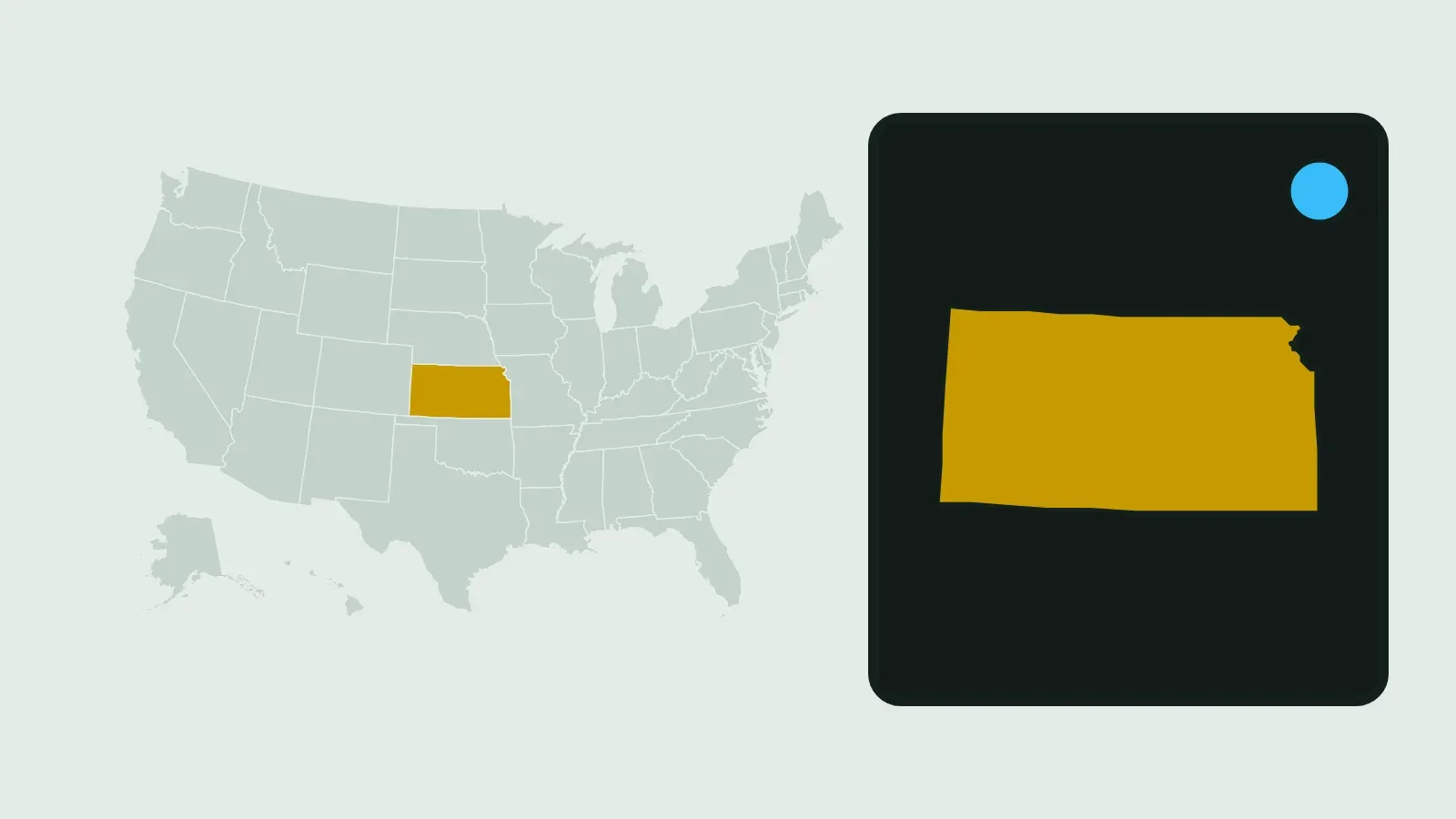
At a glance
Kansas households paid an average of 14.44¢ per kWh for electricity in 2025, below the national average, and $14.81 per thousand cubic feet for natural gas, slightly below it. EIA reports no energy-only supplier sales in Kansas, so the utility that serves you sells the power. Evergy and Liberty must offer net metering under a state act amended in 2024; co-ops and municipal utilities are not required to. The state's home efficiency and HEAR rebates were planned but not open on the state's last update.
Kansas at a glance
What Kansans pay for electricity and gas
The U.S. Energy Information Administration (EIA) reports statewide averages: total residential revenue divided by kilowatt-hours sold, so delivery charges and fees are inside the figure. Your own rate depends on your utility, rate class and season, so treat these as a yardstick, not a quote.
| Energy | Kansas 2025 | Kansas 2024 | U.S. 2025 |
|---|---|---|---|
| Electricity (¢ per kWh) | 14.44 | 14.15 | 17.23 |
| Natural gas (dollars per Mcf) | 14.81 | 13.14 | 15.34 |
At 14.44¢, a month with 1,000 kWh of use comes to about $144. Kansas electricity rose about 2% between 2024 and 2025 (14.15¢ to 14.44¢) and sat about 16% below the U.S. average. Gas rose about 13% in a year, from $13.14 to $14.81 per Mcf, and was about 3% below the U.S. average. One Mcf holds roughly 10.37 therms, so $14.81 per Mcf is about $1.43 per therm; the kWh, therm and ccf guide explains the units on your bill.
Who sells you electricity
EIA's 2024 state profile shows all Kansas retail electricity sales as full-service sales and none as energy-only sales, the category that marks retail choice. In practice the utility serving your address is the seller. The Kansas Corporation Commission (KCC) lists two investor-owned electric companies under its jurisdiction, Evergy and Liberty Utilities (Empire District). It says electric co-ops and municipal utilities generally do not fall under its jurisdiction.
Ask your utility where its tariff is posted and how its rates are set. The rate structures guide explains what the common lines on a bill mean.
Solar panels and what the grid pays you
Kansas net metering runs under the Net Metering and Easy Connection Act (K.S.A. 66-1263 to 66-1271), adopted in 2009, amended in 2014 and amended again in 2024 by House Bill 2527. Evergy and Liberty Utilities must offer it. Electric cooperatives and municipal providers are not required by the statute to, so customers of those utilities need to ask.
- Cap: utilities serve eligible customers first come, first served until net-metered capacity reaches 2% of the utility's prior-year peak demand. Starting July 1, 2025 the share rises 1% each July until it reaches 5% in 2027, measured against the utility's highest annual peak since 2014, the KCC says.
- System size: the KCC lists 25 kW for residential systems that began operating before July 1, 2014, and up to 150 kW, set by a formula based on historic use, for customers starting on or after July 1, 2024.
- 2026 limit: for customers participating on or after January 1, 2026, the KCC lists generation capacity limited to 50% of export capacity. The page does not explain how that works with the 150 kW figure.
The federal tax credit for rooftop solar ended for systems finished after December 31, 2025. What happened to 25C and 25D explains what is left.
Home energy rebates
The Kansas Energy Office, a division of the KCC, runs the state's federally funded home rebates. Its kshomerebates.gov site names two programs, the Home Efficiency Rebate program (HER, the whole-home program DOE calls HOMES) and the Home Electrification and Appliance Rebate program (HEAR). It lists $52.9 million for HER and $52.6 million for HEAR.
The site describes the application portal as a future step that follows DOE approval and receipt of funds, and gives no launch date. Its page metadata shows a last modification on June 15, 2026. The Kansas Energy Office page says the program is "reviewing recent DOE updated guidance" and that updates will follow. Rebate amounts per household are not listed on the site. Until the state says applications are open, do not count on a Kansas rebate. How the programs work is in the HOMES and HEAR guide.
Who to call
- Electricity: the Kansas Corporation Commission regulates Evergy and Liberty Utilities (Empire District). Co-ops and municipal utilities generally fall outside its jurisdiction.
- Natural gas: the KCC lists Atmos Energy, Black Hills, Kansas Gas Service, Amarillo Natural Gas Company and Texas, Kansas, Oklahoma Gas as jurisdictional gas utilities.
- Rebates: the Kansas Energy Office within the KCC.
What is distinctive about energy in Kansas
EIA lists wind as Kansas's primary source of electricity generation. In 2024 net generation was about 57.7 million megawatt-hours and retail sales about 41.3 million. Generation inside the state is not the same as what reaches your meter, which depends on the utility serving you. For how a bill is built, see the electric bill guide.
Quick answers
Can I choose my electricity provider in Kansas?
EIA's 2024 profile shows no energy-only retail sales in Kansas, which means the utility serving your address sells you the power. Your bill names that utility.
Does Kansas have net metering?
Yes, under the Net Metering and Easy Connection Act. Evergy and Liberty Utilities must offer it. Co-ops and municipal utilities are not required to, so check with yours. The 2024 amendments changed size limits and the monthly billing method.
Are Kansas home energy rebates available now?
Not on the state's last update. The state describes the portal as opening after DOE approval and receipt of funds and gives no date. Check the Kansas Energy Office page before you start work you hope a rebate will cover.
How much did Kansas gas prices change in a year?
EIA's average for Kansas households rose from $13.14 per Mcf in 2024 to $14.81 in 2025, about 13%. The U.S. average in 2025 was $15.34.
Sources
- EIA — Electric Power Annual, Table 2.10, average price by state
- EIA — Average residential natural gas price by state
- EIA — Kansas electricity profile
- Kansas Corporation Commission — Net metering
- Kansas Corporation Commission — Regulated utilities
- Kansas Energy Office — Kansas Home Rebates
- Kansas Energy Office — Program page
Prices are EIA statewide averages. Facts on this page were checked against these sources on November 19, 2026. Rebate programs and utility policies change; confirm with your utility and the Kansas Energy Office before you act.
Read next
-
Bill guide
Net metering
How exported solar power is credited on a bill, how net billing differs, and where to find your rule.
-
Credits and rebates
HOMES and HEAR rebates
State-run DOE rebates and the May 2026 rule changes. Status differs by state.
-
State reading
Iowa
13.62¢ per kWh; your utility sells the power; net billing or inflow-outflow; rebates not open on last update.